
The Hidden History of Frequency Technology
For something that’s suddenly everywhere, the idea of frequency isn’t new.
We already rely on it every day. The heart produces measurable rhythms. The brain operates in waves. Technologies like EEG and EKG are built entirely on frequency. The deeper question has always been: Can frequency do more than measure the body? Can it influence it?
That question has been explored for over a century.
Early Signals
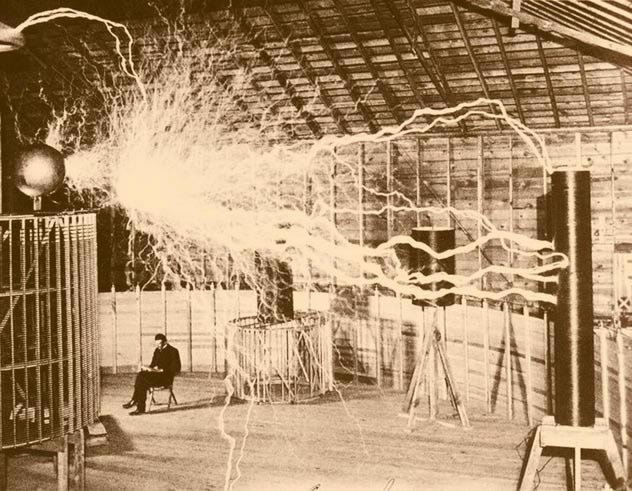
Much of the early thinking traces back to Nikola Tesla, who believed energy, frequency, and vibration were fundamental to how the universe operates. His experiments with resonance and wireless transmission suggested that energy could move, and interact, in ways that science was only beginning to understand. Others followed.
Royal Raymond Rife explored the idea that specific frequencies could affect microorganisms. Georges Lakhovsky proposed that cells function like resonant circuits. Antoine Priore developed electromagnetic systems that drew serious attention at the time. These weren’t fringe ideas in their moment, they were early attempts to understand a layer of biology that science didn’t yet have the tools to fully measure.
The Reich Chapter
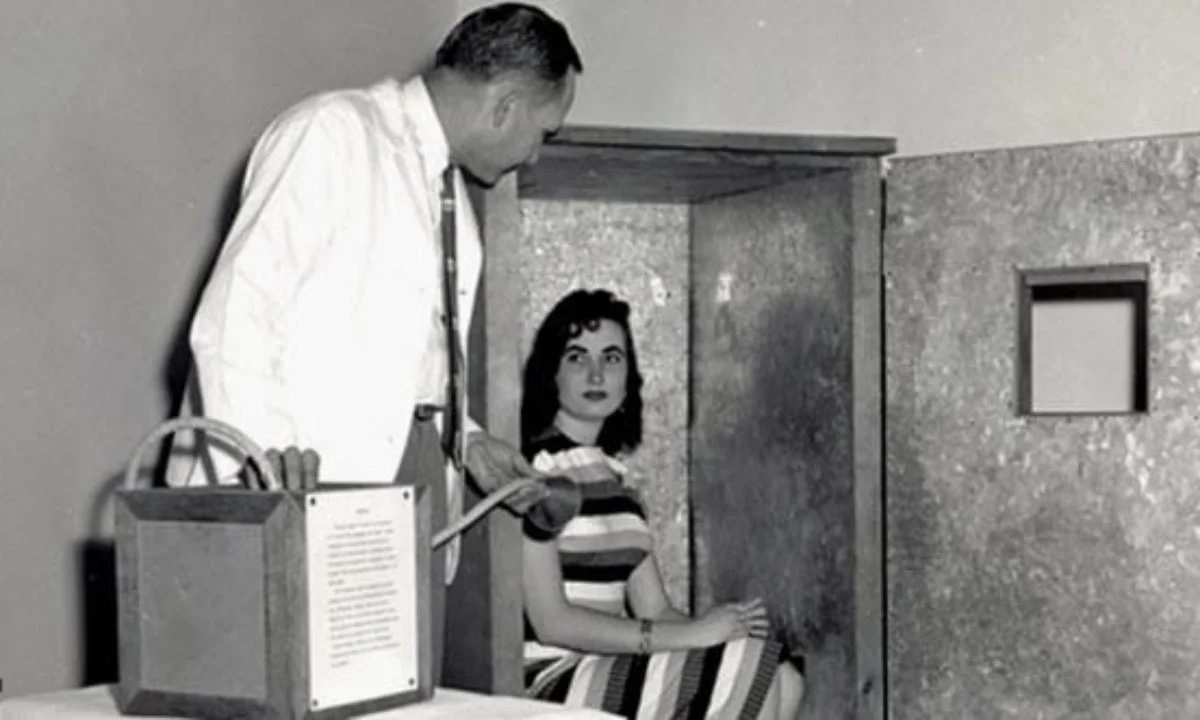
Wilhelm Reich took this exploration even further. He proposed that living systems are influenced by a form of life energy he called “orgone,” and built devices, most notably the orgone accumulator, designed to concentrate and interact with that energy.
Reich’s work attracted both strong interest and strong opposition. His ideas challenged existing models of health, energy, and human biology, and ultimately ran into legal and institutional resistance. One thing is clear: He was working in a space that conventional science wasn’t prepared to engage with.
The Technology Caught Up
While these early explorations faded from the mainstream, the underlying science of frequency advanced rapidly. Everything from wireless communication to modern imaging relies on precise control of frequency. The technology matured. The ability to measure subtle systems improved. And now, for the first time, those tools are being applied back to the kinds of questions early pioneers were asking.
A New Phase
Today, frequency is re-entering the conversation, not as theory, but as something people can interact with directly. Researchers are revisiting bioelectrical systems. Technologies like TMS and PEMF are being studied and used in clinical settings. And a growing number of consumer technologies are making frequency-based tools accessible in everyday life.
What’s different now isn’t just openness: it’s capability.
What This Really Means
The history of frequency technology isn’t about something being “hidden” and suddenly revealed: It’s about timing.
Ideas that were once difficult to prove are now being revisited with better tools, better data, and a broader willingness to explore beyond traditional models. And that shift changes everything. Because once something becomes measurable, usable, and accessible,it stops being dismissed.
It becomes part of the future.